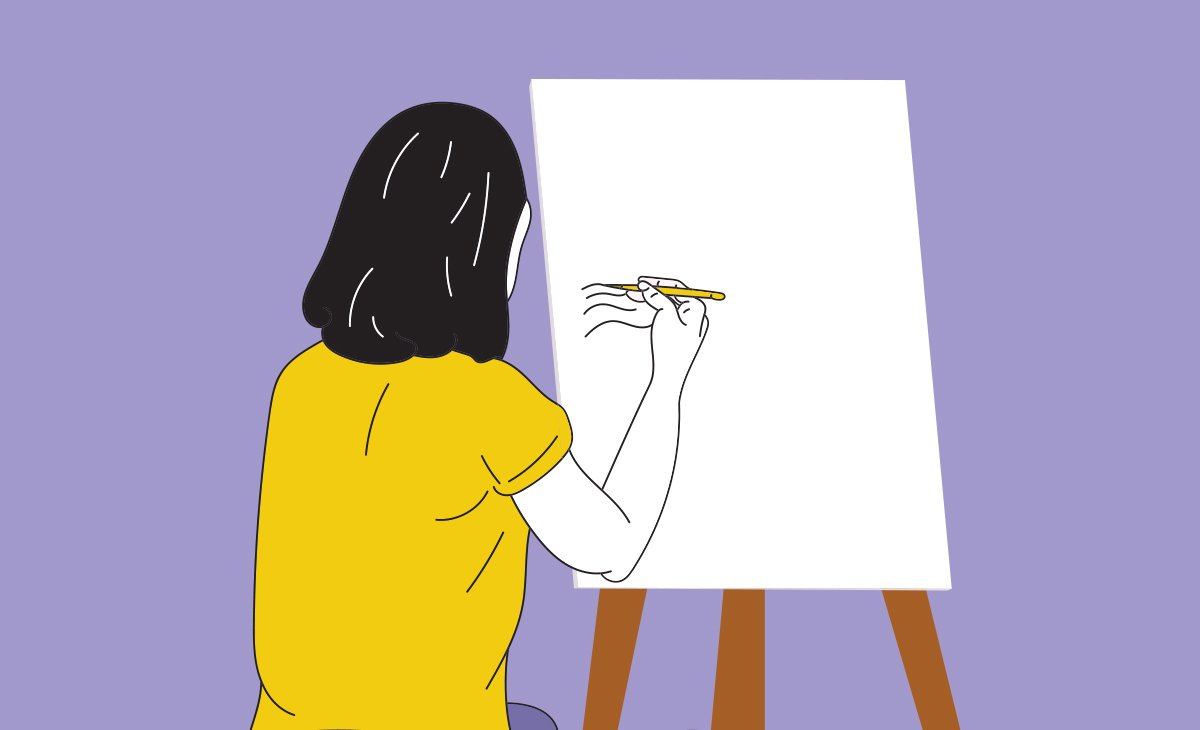
Illustration by Paris Bilal
“In the beginner’s mind there are many possibilities, but in the expert’s there are few.” Shunryu Suzuki
The holidays of late fall and early winter are laden with tradition, memories, and expectations. As I enter this often fraught season, I consider the Buddhist teaching of beginner’s mind, the concept of meeting each moment with curiosity and wonder.
The idea of beginner’s mind was introduced to western culture in 1970 by Zen Master Shunryu Suzuki in his book Zen Mind, Beginner’s Mind. He tells us, “In the beginner’s mind there is no thought, ‘I have attained something.’ All self-centered thoughts limit our vast mind. When we have no thought of achievement, no thought of self, we are true beginners. Then we can really learn something. The beginner’s mind is the mind of compassion. When our mind is compassionate, it is boundless.”
A beginner’s mind comes with an attitude of humility. I don’t know everything I think I know. I still have much to learn.
Children are good role models for beginner’s mind. Watch a child try a new skill. They are engaged, present, persistent. A one-year-old learning to walk takes a few steps, falls down, gets up, tries again. Tumbles. Up again. Over and over, fully engaged, all smiles when she lands into mom’s outstretched arms. That can be us, too. We can recapture some of that joy when we persist in a new skill, becoming engaged, present, persistent. We give ourselves permission to not do it perfectly.
Another thing children do is ask questions, wonder why, experiment. They try putting things together that sometimes work and often don’t. They don’t feel like a failure if the tower of blocks falls; they laugh and try again.
A beginner’s mind gives us permission to fail. Can I take on the mind of a scientist? A scientist’s failures are as important as their successes—this didn’t work, try another way.
One obstacle to a beginner’s mind is that we know too much. It’s so easy to do things we know well—drive the same way to work, cook familiar foods, talk about the same grievances, hang out with the same people. What if we set our expertise aside and do something we don’t know how to do, something we’ve never done, something that is hard for us? Our lives can be so routine that we have little space for the delight of being a newbie. Having a beginner’s mind is making a fresh start to everything we do. I like to think of it as Montessori for adults.
We have a friend willing to test our experimental cooking as we explore new recipes. Our pilot project is much more fun when shared—we all know it needn’t be perfect—sometimes it’s an outright failure. The point is to grow and explore, not get it right.
I invite you to join me in rediscovering our beginner’s mind. The one we came with.Tony Zampella, founder of Bhavana Learning Group, describes three aspects of cultivating a beginner’s mind. First, tolerate discomfort. Learn to be comfortable with uncertainty. Our comfort zone is way overrated. How can we learn when we are only willing to be comfortable? We can be so comfortable in our familiar ruts, we would rather spruce up the rut than get ourselves out of it.
Secondly, embrace not knowing. Be gentle with yourself. I volunteer with seniors as they build their technology skills. People walk in not knowing how to text or use a new phone or find a podcast. We walk them through the steps, introduce them to unfamiliar apps, welcome their questions. I appreciate their willingness to say, “I don’t know how to do this.” Step by step they gain the skills to let technology work for them.
Finally, slow down enough to become more present. It is much harder to speed through something that is new to us. Travel is a way to slow down. I am not sure where I am going or how long it will take. Last winter I visited the World War II Museum in New Orleans. I could have spent days there! It’s a campus of seven buildings that immerses you in that historical experience. I set aside the little I already knew and walked into a brand new world. I was in the moment, present to the recorded voices, the personal survivor stories, the expansive model of the D-day invasion. I meandered through time and space, no rush, no agenda.
Here is a suggestion for accessing your beginner’s mind. List 10 things you would like to learn or do. Not things you need to do or are good for you. Things you really want to learn or experience, places you want to go, people you want to meet. Brainstorm. Don’t edit or judge. Even if it feels crazy or unrealistic, write it down. Then go through the list and pick one or two you want to try. Maybe it is learning a new language, taking a cooking class, trying pickleball. Perhaps you want to travel to a place you’ve been curious about or visit a friend across the country or explore a National Park. What would it take to make it happen? What is the first step?
As I write this, I think of many things I would like to try—watercolor painting, Tai Chi, going to a midweek matinee movie, trying an electric bike, taking the train to Chicago. A beginner’s mind might give us the freedom to try a do-it-yourself project.
What are the benefits of a beginner’s mind? We learn and grow. It is hard to learn new things if we know everything. We improve our problem solving skills. We enhance our creativity, uncovering creative tendencies we may have packed away in favor of safety or efficiency. We increase our openness and curiosity.
How will I enter this holiday season with a beginner’s mind? I will practice curiosity. Often the people we visit with at the holidays are people we care about but don’t often see. What might we learn about them that we don’t already know (or think we know)? Rather than assume I know who people are and their opinions and stances, based on how I have known them, I can listen for what might be new, how they’ve changed, or how their interests have evolved. This takes some careful listening and often encouragement. Tell me more about that.
I can get tickets to a performance by a local theater or choir and invite an acquaintance I would like to know better. I can visit an indoor farmer’s market, try out a new ethnic restaurant, volunteer at a local food shelf. I can practice compassion.
I invite you to join me in rediscovering our beginner’s mind. The one we came with. Let me know what you learn.
Mary Lou Logsdon is a spiritual director in the Twin Cities. She can be reached at logsdon.marylou@gmail.com.